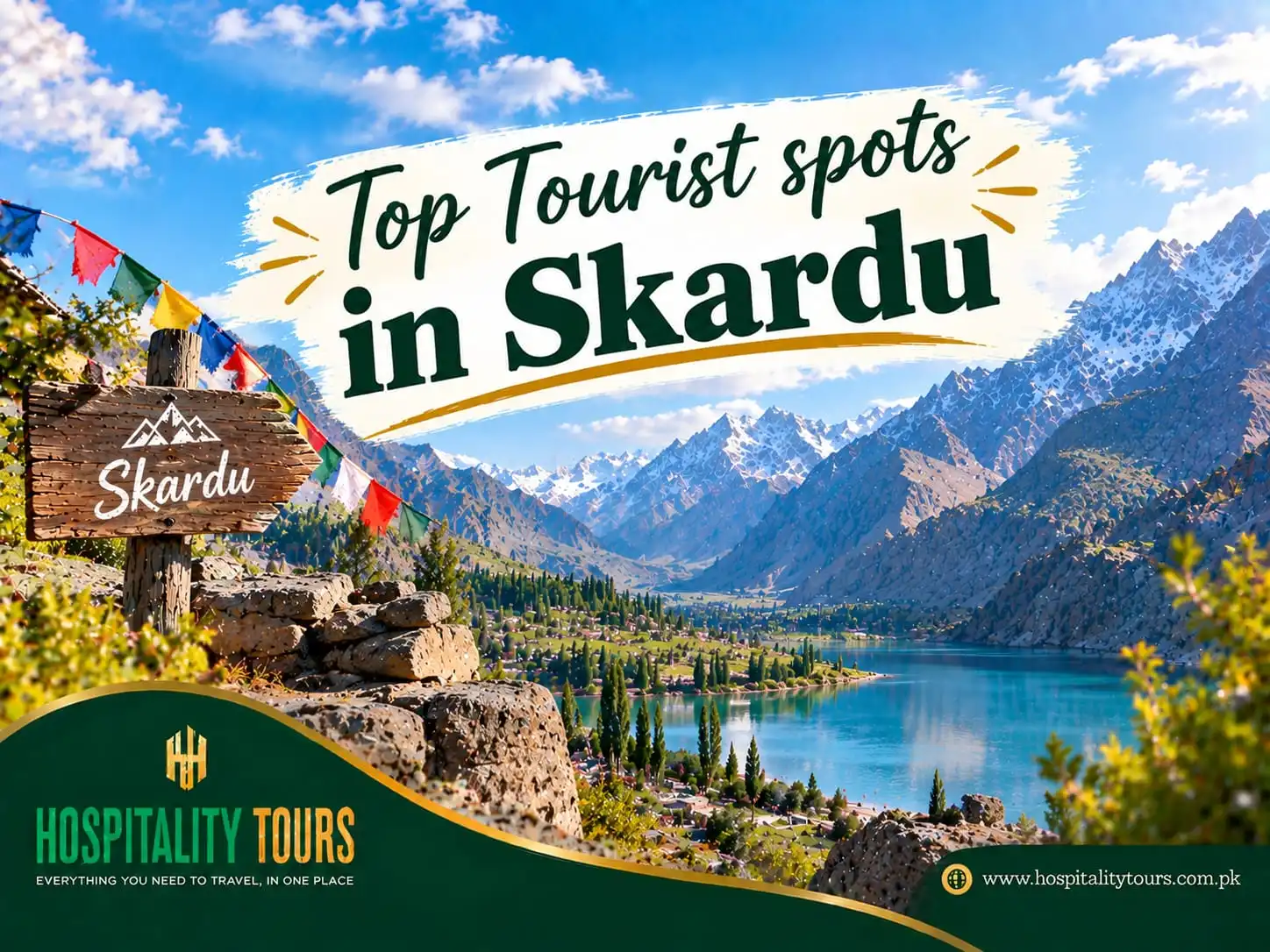
Top Tourist spots in Skardu
Skardu shocks visitors. They assume it is a mere rest stop on the way to K2 and other areas. Skardu offers variability and interest within a day or so that visitors do not expect. It features a cold desert, three alpine lakes near the bazaar, a 16th-century fort, the highest plateau of the world, a 180 ft waterfall, and so much more. All of this starts in a city at 2,228 meters with functioning hotels, restaurants, and an airport. Skardu features a diversity that many do not expect.
There are many who visit Skardu with only a short time and a list of numerous things to do. This article aims to reduce the list by selecting which sites are worth the time and outlines the duration that each site will take. Skardu features many sites that are more than worthy of a day trip, and we aim to highlight those to our clients.
We in Pakistan have had the pleasure of conducting Skardu tours from Islamabad and are prepared to do the same for you! We will ensure your itinerary is researched and solidified based on our expertise with the region’s available lodging, transportation, and licensing of guides. We will provide you with a quote with our recommendations based on your requested travel dates without any obligation.
HospitalityTours.com.pk arranges Skardu itineraries from our Islamabad office. Hotels by name, 4x4s and drivers who know the roads, licensed local guides, and a schedule built around what is open on your dates rather than what looks good on paper. Send your dates on WhatsApp, and we will come back with a plan and a price before anything is booked. Contact at the end.
Since most people don't spend much time here, I usually start my trips to Skardu at Kharpocho. It was built by Ali Sher Khan Anchan of the Maqpon dynasty in the late 16th Century. Its name means King of Forts in Balti. Kharpocho is located on a rock spur that splits the Indus and Shigar Rivers. It takes about 30 minutes to reach the top of the Fort. You follow a path with steep drops on one side, and two rivers far below. The Fort provides a view of the entire valley with the Karakoram on every horizon. An ancient mosque exists within the courtyard of the Fort. Although the Fort has not undergone much restoration, it is still honest. Come in the morning because by noon the rock holds heat and the photographers are there.
Four kilometers away from the City Center, and thirty minutes away by car, you can see the Katpana Cold Desert. With the Karakoram behind it, it has a strange visual effect that is made more strange by snow on the dunes in winter. A single view at this location holds dunes, irrigated green strips, a small lake, and snowfields on the peaks, which do not belong in the same frame, but are there.
Stay for dark. Katpana sits away from any major light source, and the altitude clears the air, which makes it one of the better stargazing spots in the country. An hour after the last photo of the dunes, and you are lying on sand watching a sky that most people only see in photos.
Manthal Buddha Rock
Three km from Skardu on the Satpara road. A seated Buddha relief is carved into a big rock of Granite. It is considered one of the important relics of the pre-Islamic period, which is dated to the 8th or 9th Century. It is a must-see place because one of the main reasons people miss this place is that they have been to Skardu before.
Satpara Lake and Satpara Dam
At around 2600 meters, it takes 5 km to reach Satpara Lake from Skardu City. It is the main drinking water source of the valley and has beautiful turquoise water to boast of, as well as an island. The Satpara Dam, which was built in 2011, helps generate 17.366 megawatts for the valley. The outflow is regulated by the dam.
Most vacationers stop at the Lake on their way to Deosai. This is normal, and on the way back, the lakeside stop is really nice, as the angle of light on the water reflects a nice shade.
Trout Fishing and boating are available here and are seasonal. Boat to the island and back.
Shangrila Resort and Lower Kachura Lake
At around 2,500 meters and 30 kilometers from Skardu city is Lower Kachura Lake, also known as Shangrila Lake. This Lake is turquoise, heart-shaped, and has an amazing resort built on its coast (started in 1983). The resort has red-roofed cottages built with wonderful gardens overlooking the water. The resort, famous for the restaurant in a crashed plane, has a unique design.
The photos you see online are a great representation of Lower Kachura Lake. This is rare, and most of the monumental photos you see online are much less impressive in person. The gardens and boating spots are available, and it has very nice sunset hours.
Upper Kachura Lake is located slightly above on the same hills. This Lake does not have a resort built, is a bit calmer, and less visited. It is nice to spend the day and go back and forth between Upper and Lower Kachura Lakes.
Garden of Eden in Pakistan? Sounds made up, right? Not really. The Deosai National Park, with 70% of the land covered in grass, is at an elevation of 4100 meters above sea level, which makes it the 2nd highest plateau in the world after Tibet. A trip to this place, however, is impossible after October, as one will not find a route to it. In the months of July and August, a road, built through this plateau, is open and safe to pass through for a duration of two hours, one way, though. The road cuts through flat, beautiful plain grasslands and streams which seem to continue forever. Several wildflowers dot the grasslands during the journey in the month of July. The beauty of this plain land, however, is not complete without the sighting of the Lake in it from a height of about 4142 meters. This Lake in the centre of the plateau is home to wildlife, including Himalayan Brown bears, which can be spotted early in the morning. Planes to Islamabad from the rest of the world only land at 507 meters above sea level. A majority of the people are negatively affected by the elevation change. To ensure that people are not negatively affected by this rapid elevation change, take a rest day in the city before a mountain-driving day.
The 30 kilometers east of Skardu, down a beautiful tree-lined road and apricot orchards, is Shigar Valley. Shigar Fort is a monument of old beauty built by the locals and is a great stop on this road. The Fort is the base of the more challenging Baltoro trek.
Shigar Fort, known locally as Fong Khar or The Fort on the Rock, was constructed in the 17th Century. The Aga Khan Trust for Culture did a wonderful restoration job, and now the Fort is a hotel managed by Serena Hotels. Some of the finest traditional craftsmanship in Baltistan can be seen in the wood carvings in the original sections of the Fort, which date back to Pre-Islamic times and show influences from Buddhism and Tibetan arts.
The village of Shiggar has old lanes, old mosques, and a pace that is worlds apart from the frenzied pace of the city. The mornings are a good time to go. The Fort is a good option for a budget overnight stay. The morning light in that valley from the fort courtyard is worth going there.
Manthokha Waterfall
This attraction is about 80 km along the Kharmang Valley from Skardu city, a distance covered in around two to three hours via the only road available. The waterfall is about 180 feet high and is on the Manthokha stream. This area has a trout farm and picturesque green pastures and is backed by the rocks of the Karakoram range.
The drive through Kharmang is great, with many villages that most people who go to Skardu don't get to see. The final stretch of the road to the waterfall needs good ground clearance.
This trip takes all of one day. Doing this at any other time is a huge waste of time, and combining this with anything else that needs a full day is just as big a waste.
Khaplu and Khaplu Palace
About a two-hour drive from Skardu is Khaplu Valley. Alongside the beautiful apricot orchards, you'll find a historic bazaar and Friday mosque with a Tibetan-style interior.
Khaplu Palace, or Yabgo Khar, was built in the mid-1800s as the Khaplu Raja's residence. After many years of abandonment, the Aga Khan Cultural Services restored the Palace, now functioning as a heritage hotel managed by Serena Hotels, with museum rooms that are open each day to the public.
After Khaplu, the road towards Hushe continues to provide trekking access to Masherbrum and the Gondogoro Pass. For any climber interested in serious mountain trekking, this district is worth a visit in itself.
Skardu Bazaar
Well worth a slow afternoon visit. You can find Balti embroidery, hand-woven fabrics, dried fruit, walnuts, and an even more extensive gemstone trade. Aquamarine, tourmaline, and garnets are all found in the Karakoram mines. No other place is this gemstone trade more active than Skardu.
Purchasing gemstones without an understanding of what you're looking at is risky. Most of the vendors are straight; however, the stones vary massively in quality and origin, and there is no way to verify the claims on the spot. If it's important to you, ask the seller which mine and which district, and buy from someone who gives a consistent answer.
Dried apricots and walnut oil are great things to purchase. None of the gemstone trading hassles are necessary for you to buy these items.
Basho Valley
A greater green valley near Skardu. Dense pine forests are on the sides, leading to highland meadows. This valley can be accessed on a rough patch of road and is best experienced as an overnight camping trip. It has very few visitors and little to no man-made development, which helps its appeal but can also be constraining.
If you have a spare day and want something different from the main sand and rock landscape of Skardu, then this is definitely worth the trip.
Days and how to structure them
Day 1: Visit Kharpocho Fort, then spend the afternoon viewing the Katpana Desert and the Manthal Buddha. End the evening with some stargazing at Katpana.
Day 2: Head to Satpara Lake, then to Kachura and Shangrila, spending the night at Shangrila if you can.
Day 3: Head to Deosai for the day and your only stop of the day. Take the rest of that day off and the next day as well to help lower your pace.
Day 4: Head to the Shigar Fort and spend the night there.
Day 5: Long day or an overnight trip to Khaplu.
Day 6: Make a full round trip to Manthokha.
The bazaar is free to visit whenever, but it’s best as a side trip where you spend the main day at your main attraction.
Things to check and things to avoid
Deosai should always be a flexible part of your plan. It is closed by snow from around mid-September to mid-June, and the dates will vary.
Confirm the Manthokha road condition before going. The approach to the waterfall can vary based on the vehicle and recent weather.
Shigar Fort and Khaplu Palace book early. They both have only a couple of rooms and are quickly fully booked.
In Skardu, keep cash. ATMs do not work beyond the city and are unpredictable in Skardu city.
Never fly out of Skardu if your connecting flight to Islamabad, Pakistan is your last international connection. Have a buffer day.
Bring sunscreen; you never know how the sun will affect you when you're over 2000 meters high.
Don't try to go to Manthokha or Basho or Khaplu in a saloon car. A proper 4x4 is needed with a driver who has been on the road.
FAQ
What place in Skardu do you suggest for a full day? Deosai. Take a full day and a rest day before visiting.
Is the Manthokha waterfall worth a drive? Yes, if you have a full day and a proper 4x4 with a driver that has been on the road. It shouldn't be added to another long driving day.
Do you require permits? A national park fee is charged to enter Deosai. The other spots require no permits.
Here's how your week might look: City sites, Deosai, Shigar, and Khaplu with a tight schedule. Basho and Manthokha would need extra days.
For a family trip, would Skardu be appropriate? Definitely! Katpana and Kharpocho areas, as well as the lakes and Shigar and all the Bazaar sites, can be done with minimum difficulty. Preparation for altitude is necessary for Deosai. Manthokha is best explored in a good vehicle.
Let us finalize your itinerary.
What are your dates and how many people will your group have? Given those, let us know what you will not miss from this list, and we will tell you what is feasible to fit in, plan the rest of the days, fit in the accommodations and riding arrangements, and guide prices before booking anything.
WhatsApp: +92 341 111 3777
Email: info@hospitalitytours.com
Head office: Office No. 2 & 3, Ground Floor, Parish Rose Plaza, Opposite NUST Gate 4, Sector H-13, Islamabad